
Over 90 percent of consumers use online searches to find local businesses, making local search ranking factors more important than ever. For small businesses, showing up at the top of these results can mean the difference between a steady flow of customers and being overlooked completely. By unraveling the main factors that search engines use to judge local rankings, you can start building a foundation that attracts genuine attention from people nearby.
Key Takeaways
| Point | Details |
|---|---|
| Content Optimization | Develop localized, engaging content to meet the needs of the target audience and improve search rankings. |
| Business Listing Accuracy | Ensure consistent and updated business information across all online platforms to enhance visibility. |
 |
|
| Review Management | Focus on obtaining genuine customer reviews to build trust and improve local search performance. |
| Avoid Common Mistakes | Sidestep pitfalls like inconsistent NAP details and neglecting mobile optimization to optimize local search efforts. |
Defining Local Search Ranking Factors
Understanding local search ranking factors is like decoding a complex puzzle where each piece represents a different aspect of online visibility. When businesses want to dominate local search results, they need to recognize the key elements that search engines like Google use to determine their rankings.
At its core, local search ranking depends on several critical components. The research from the International Journal of Scientific Research highlights three primary pillars: content optimization, backlink building, and user experience enhancement. These aren’t just technical checkboxes but interconnected strategies that signal your business’s relevance and authority to search algorithms.
Key Local Search Ranking Elements
Let’s break down these crucial ranking factors into digestible components:
- Google Business Profile Optimization: Complete, accurate, and regularly updated business listings
- Localized Content: Website content that specifically addresses local audience needs
- Local Citation Consistency: Uniform business name, address, and phone number across online platforms
- Review Management: Quality and quantity of customer reviews
- Geographic Relevance: How closely your business matches search location queries
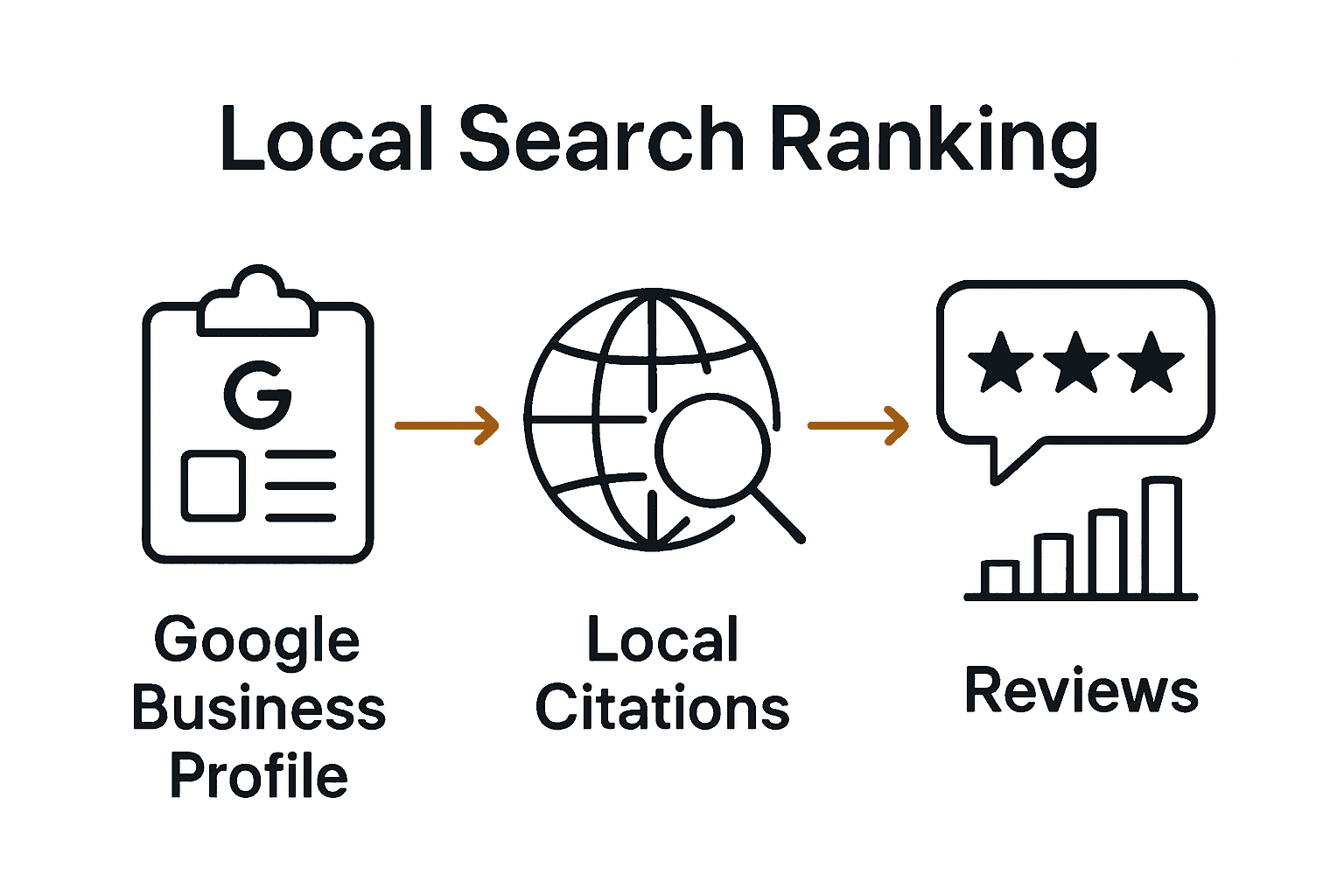
To dive deeper into developing a comprehensive local SEO strategy, check out our guide on local SEO step by step. By understanding these factors, small businesses can create targeted approaches that improve their local search visibility and attract more potential customers.
Remember, local search ranking isn’t about gaming the system. It’s about demonstrating genuine value, relevance, and trustworthiness within your specific geographic market. Each optimization you make is a signal to search engines that your business deserves prominent placement in local search results.
Types of Local Search Results and Their Importance
Local search results are far more complex than simply listing businesses near a specific location. They represent a sophisticated ecosystem of digital visibility designed to connect potential customers with the most relevant local services and solutions.
Understanding Local Search Result Categories
Search engines typically display several distinct types of local search results that businesses need to understand:
- Google Business Profile (Map) Results: Prominent boxed listings showing businesses with location, contact details, and reviews
- Organic Local Results: Traditional website listings with local relevance and geo-targeted content
- Local Pack Results: Top three geographically relevant business recommendations
- Sponsored/Paid Local Results: Advertisements targeting specific local geographic areas
Each result type serves a unique purpose in helping users find precisely what they need within their immediate vicinity. When a potential customer searches for “plumber near me” or “best restaurant in [city]”, these result types work together to provide comprehensive local information.
To maximize your local search visibility, businesses must optimize across multiple result types. Understanding local marketing best practices becomes crucial in developing a comprehensive strategy that targets these different search result categories.
The real power of local search results lies in their ability to create hyper-targeted connections. Unlike broad, generic search results, these listings provide immediate, actionable information that helps consumers make quick decisions about which local businesses to engage with. By understanding and strategically optimizing for these different result types, businesses can significantly improve their chances of being discovered by potential local customers.
How Google Evaluates Local Business Listings
Google’s evaluation of local business listings is a sophisticated process that goes far beyond simple location matching. The search giant uses a complex algorithm that examines multiple dimensions of a business’s online presence to determine its credibility, relevance, and authority in local search results.
Key Evaluation Criteria
The research from UMA Technology highlights several critical factors that Google considers when assessing local business listings:
- Content Quality: Detailed, accurate, and regularly updated business information
- Expertise and Authoritativeness: Demonstrated professional credentials and industry reputation
- Trustworthiness: Consistent business information across different online platforms
- User Engagement: Quality and quantity of customer reviews and interactions
- Local Citations: Number and consistency of business mentions across directory listings
Interestingly, Google doesn’t just look at raw data. The search engine’s algorithm is designed to understand the context and nuance of local business information. For instance, a business with multiple positive reviews, complete profile details, and consistent information across the web will typically rank higher than a business with sparse or conflicting online information.
Unlocking the power of local SEO through online business listings becomes crucial in helping businesses understand and optimize these critical evaluation factors. By strategically managing their online presence, businesses can significantly improve their chances of being favorably ranked in local search results.
Ultimately, Google’s goal is to connect users with the most relevant, reliable, and high-quality local businesses. This means that simply having a listing isn’t enough. Businesses must actively manage their online reputation, ensure accuracy of information, and demonstrate genuine value to their local community to stand out in Google’s complex local search ecosystem.
Impact of Website and Content Signals
Website and content signals are the digital DNA that search engines use to understand, rank, and recommend businesses online. In the complex world of local search, these signals act like a comprehensive report card that evaluates how relevant, authoritative, and valuable a website truly is.
Key Content and Website Ranking Factors
Research from multiple sources highlights several critical signals that dramatically influence local search rankings:
- Content Length and Depth: Comprehensive, in-depth content that thoroughly addresses user questions
- Content Freshness: Regularly updated information that demonstrates current expertise
- User Engagement Metrics: Time spent on page, bounce rate, and interaction levels
- Keyword Optimization: Strategic and natural integration of local and industry-specific terms
- Technical Performance: Site speed, mobile responsiveness, and secure hosting
The Oregon State University research emphasizes that content isn’t just about quantity but quality. Search engines now prioritize content that genuinely helps users, tracks their engagement, and provides comprehensive answers to their specific queries.
To maximize these critical signals, businesses need a strategic approach to content creation. Understanding the key elements of good website copy becomes essential in crafting content that not only ranks well but also genuinely serves potential customers.
Ultimately, successful local search optimization requires thinking beyond traditional SEO tactics. It’s about creating a holistic digital experience that demonstrates expertise, builds trust, and provides real value to your local audience. Each piece of content, each website interaction, becomes a signal that tells search engines why your business deserves top ranking in local search results.
Role of Reviews, Citations, and Engagement
Local search success hinges on three critical digital signals: reviews, citations, and user engagement. These interconnected elements serve as the digital reputation system that search engines use to validate a business’s credibility and relevance in local markets.
Breaking Down the Digital Reputation Ecosystem
Key components that drive local search performance include:
- Online Reviews: Quality, quantity, and recency of customer feedback
- Local Citations: Consistent business information across multiple platforms
- User Interaction Metrics: Website engagement, click-through rates, and social signals
- Response Quality: How businesses interact with and manage their online reputation
- Verification Signals: Claimed and verified business listings
The UMA Technology research underscores the critical importance of maintaining accurate business information across digital platforms. Inconsistent or outdated citations can significantly damage a business’s local search visibility, creating invisible barriers to customer discovery.
Boost your local search rankings with more Google reviews becomes a strategic imperative for businesses looking to improve their local search performance. Reviews aren’t just social proof. They’re powerful ranking signals that demonstrate real-world customer satisfaction and business credibility.
Ultimately, local search optimization is about building a comprehensive digital reputation. It’s not just about collecting reviews or listings, but creating a genuine, responsive online presence that reflects the true value of your business. Each review, each citation, each user interaction tells a story about your brand’s reliability, expertise, and commitment to customer success.
Common Pitfalls and How to Avoid Them
Local search optimization is a minefield of potential mistakes that can derail even the most well-intentioned marketing efforts. Understanding these common pitfalls is the first step in developing a robust, effective local search strategy that consistently delivers results.
Top Local SEO Mistakes to Sidestep
Businesses frequently encounter several critical errors that can severely impact their local search performance:
- Inconsistent Business Information: Mismatched NAP (Name, Address, Phone) details across platforms
- Neglecting Google Business Profile: Incomplete or outdated listing information
- Fake or Manipulated Reviews: Attempting to game the review system
- Keyword Stuffing: Overloading content with repetitive local keywords
- Ignoring Mobile Optimization: Failing to create mobile-friendly website experiences
The research from the International Journal of National Research and Development highlights the growing complexity of digital marketing strategies. Algorithmic challenges and data privacy concerns create additional layers of complexity for businesses trying to optimize their local search presence.
Boost your local search rankings with more Google reviews can help businesses navigate the nuanced world of online reputation management. The key is to approach local search optimization as a holistic strategy rather than a series of disconnected tactics.
Navigating local search requires a proactive, authentic approach. It’s not about tricking algorithms but genuinely demonstrating value to your local community. Businesses that focus on providing real value, maintaining accurate information, and engaging authentically with their customers will ultimately succeed in the competitive local search landscape.
Master Local Search Rankings with Fleek Consulting
If you find yourself overwhelmed by the many moving parts of local search ranking factors like Google Business Profile optimization, local citations, and review management this article has made one thing clear. Success in 2025 means embracing a well-rounded strategy that builds trust and relevance in your local market. Common challenges like maintaining consistent business information and engaging customers with fresh content can leave your visibility stagnant and growth stalled.
At Fleek Consulting we understand these hurdles and offer powerful solutions tailored to conquer them. Our Local SEO system GeoAmp strengthens your Google Business Profile with keyword optimization and automated review generation to drive local leads consistently. Combined with our AI-powered approaches in Search Engine Optimization and expert management of Online Directory Listings we create a comprehensive presence that search engines trust and customers choose.
Don’t let complex local search signals hold your business back. Visit Fleek Consulting now to learn how you can take control of your online reputation and dominate local search results in 2025. The time to act is now because every day without optimized local visibility is a missed opportunity.
Frequently Asked Questions
What are the key local search ranking factors for businesses?
The primary local search ranking factors include Google Business Profile optimization, localized content, local citation consistency, review management, and geographic relevance.
How does Google evaluate local business listings?
Google evaluates local business listings based on content quality, expertise and authoritativeness, trustworthiness, user engagement, and local citations. This process helps determine a business’s relevance and credibility in local search results.
Why are online reviews important for local search rankings?
Online reviews are crucial because they impact a business’s credibility and visibility. A higher quantity and quality of reviews can signal customer satisfaction and increase a business’s ranking in local search results.
What common mistakes should businesses avoid in local SEO?
Businesses should avoid inconsistent business information, neglecting their Google Business Profile, attempting to manipulate reviews, keyword stuffing, and ignoring mobile optimization to prevent negatively impacting their local search performance.